
San Benito Resident Lookup Sources
One person can surface in several San Benito record systems. Each system proves something narrow. Cameron CAD ties a name to a titled parcel account. The Texas voter lookup confirms a registration record when lawful fields match. Court material may supply a case number, a filing date, or a status. Vital products document an event. Historical sources cover a person who predates current online records. A San Benito resident lookup works best when you keep the source and the date beside every match. A name alone tells you almost nothing about where it came from.
| Record | What It Confirms | Where | Access |
|---|---|---|---|
| Parcel account | Titled owner, PID or GEO ID, and situs or mailing context | Cameron CAD Property Search | Public account search; it does not list every person at a parcel |
| Voter registration | Name, VUID, status, and election geography when displayed lawfully | Texas MVP voter lookup | Free lookup; protected fields and protected voters are withheld |
| Court index | Party names, cause number, filing, court, and public status clues | Cameron County public case portal | Index access varies; copies and restricted files require the clerk |
| Vital product | A reported birth, death, marriage, or divorce event or verification | Texas DSHS Vital Statistics | Eligibility, identification, and record-age rules apply |
| Historical evidence | Earlier address, family, obituary, school, or cemetery clues | San Benito Historical Society | Appointment or remote research; not a current-person roll |
Start with the source closest to the fact you need. A parcel question belongs with CAD and the County Clerk. A registration question belongs with Texas MVP or Cameron County Elections. An old family trail calls for directory or newspaper evidence compared against a deed, probate file, obituary, or cemetery record. Remember that a single hit is only a lead.
San Benito Resident Name Keys
Names alone make a weak start. Initials, compound surnames, accents, and shifted surname order can all change between records. Pair the name with a parcel PID, a GEO ID, a VUID, a court cause number, an approximate date, a spouse, or a legal description. Cameron CAD accepts owner name, street address, PID, and GEO ID. Its situs address marks the parcel location. Its mailing address shows where tax correspondence goes. Neither field proves present occupancy.
Record the first result as an account or index placement, not a conclusion. CAD search keys and owner or appraisal context only take you so far. Follow the parcel's legal description or a recorded deed at the County Clerk before tying a person to a particular San Benito address in any residents directory or lookup effort.
| PID or GEO ID | Stable CAD account key for returning to the same parcel and map position. |
|---|---|
| Situs address | Location of the parcel, which can differ from the correspondence address. |
| Mailing address | Tax-notice destination, not proof that a person lives at the parcel. |
| Legal description | Deed and plat key that helps separate similarly numbered streets or names. |
San Benito Court Record Search
County and district court research sits apart from San Benito Municipal Court. The Cameron District Clerk links Kofile, the Tyler public portal, iDocket, and the statewide court search. Brownsville federal court runs on a separate federal docket route. Kofile's historic coverage is specific. Civil images span 1849–1920, declarations of citizenship span 1871–1890, and naturalization spans 1890–1930. Civil records are search-only for 1972–1986, and criminal records are search-only for 1953–1987. A search-only entry means calling the clerk when you need the document itself.
The Cameron County court search is the online starting point. It works for a San Benito name and its variants. The District Clerk also takes copy requests at the counter, by mail, or by email. A no-cause existence search costs $5. Locating a cause without its number also costs $5. The form states a 2–5-business-day process. Sealed, juvenile, expunged, and other confidential material can stay unavailable.
Treat the court search as a date and identity check. Never treat it as a claim about a person. The official Cameron County court-search screen is a good reminder. Save the cause number and court alongside any name match.
A cause number gives the District Clerk a precise starting point. Use it for a public copy or status request whenever an online result is incomplete.
San Benito Vital Record Limits
Texas vital records are not interchangeable with a general name search. Under Texas Government Code §552.115, a birth record becomes public on its 75th anniversary. A death record becomes public on its 25th anniversary, subject to the unidentified-death rule. Earlier records carry eligibility limits. DSHS offers certificates and verifications for Texas events. The Cameron County Clerk supplies local vital services. A verification tells less than a certified copy. A certificate is not an open invitation to inspect a protected record.
The DSHS online process asks the applicant to choose the record type. The applicant must then satisfy eligibility and identification requirements. DSHS states most online orders take 20–25 business days and that fees are nonrefundable. The digital vital-event index request is a different channel. It asks for event type, year or range, names, county, and identifying details, followed by an invoice and several-week processing. Use the product that matches the question.
The Texas DSHS vital-record application shows the distinct order choices. It also shows the eligibility prompts a San Benito resident lookup may run into.
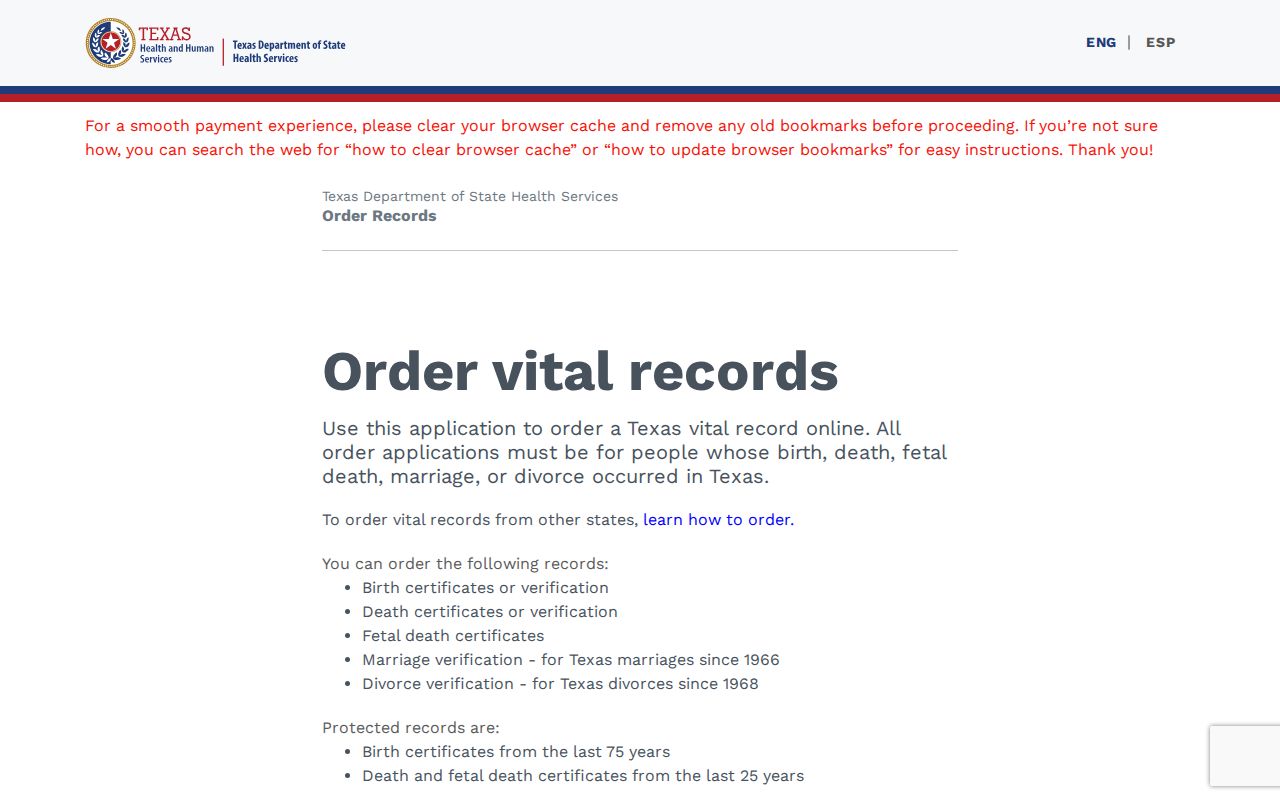
Choosing a verification rather than a certified copy keeps the request aligned with the limited fact that needs confirming.
Verify a San Benito Resident
A careful lookup links records in an order that cuts down same-name errors. First establish which parcel or registration record belongs with the name. Then use the court index only to compare identifiers and dates. Vital indexes or verifications can confirm an event. But they never establish where a person is now. For a historic trail, corroborate with an obituary, a probate record, cemetery evidence, or the San Benito Light. Do that before treating two similar names as one person.
- Search CAD by owner name or address and save the PID, GEO ID, situs, mailing field, and legal description.
- Check Texas MVP using first name, last name, date of birth, and Cameron County, or use an identification combination only when it is already known.
- Search court sources by the exact name and meaningful variants, comparing the cause number, party role, court, filing date, and public status.
- Request a custodian copy or vital verification only when the index leaves a real question and the access rules allow it.
An online listing is only a starting point. In San Benito, verifying a resident means matching that listing against the document or official product the office itself issues, since the two are not interchangeable.
- Docket
- A court’s running list of case events. A docket result can identify a case without supplying every filing.
- Index and image
- An index points to a record through fields such as party, year, or cause number. An image is the document view when the custodian makes one available.
- Certified copy
- A copy authenticated by the custodian. It is different from a search result, a verification, or an unsealed online image.
San Benito Resident History Trails
Older San Benito residents often stand out in historical sources. They can be easier to trace there than in any modern index. The San Benito Light survives in digitized form for 1914–1925. Its OCR text is searchable, and page images sit alongside it. The Historical Society goes further. Its files include people and obituary records, newspapers, tax rolls, business directories, school yearbooks, cemetery records, maps, diaries, and photographs. The Rio Grande Valley Telephone Directory offers verified issues from 1945 through 2005. There are gaps, and it covers the whole region rather than the city alone.
For the federal side of a San Benito resident lookup, the Southern District of Texas Brownsville Division handles cases from Cameron and Willacy counties. Those federal matters sit apart from county records entirely. Dockets run through PACER. Fee rules change, so confirm current charges before ordering anything. The courthouse counter can help once you hold a federal case number. Staff there can walk you through public-file access.
That Brownsville page is the official route for anything federal in a San Benito resident search. County sources handle the rest.
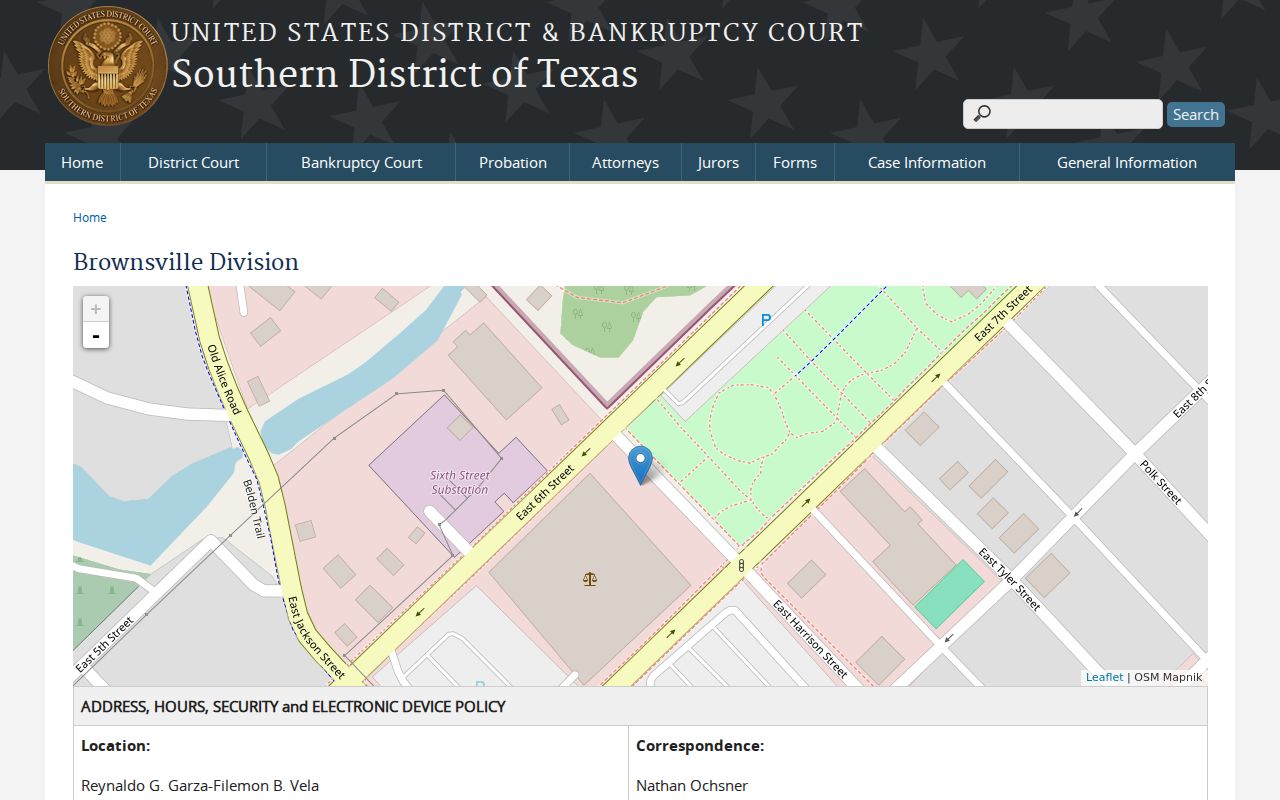
Federal and county cases belong in separate log entries. Each runs through a different custodian and a different docket system, and a San Benito records search stays cleaner when the two never blur together.
San Benito Resident Lookup Limits
Texas public access has firm edges. Address Confidentiality Program participants can use a substitute P.O. box. Parcel or voter research must never be used to expose or reverse-engineer the address behind it. Other protections apply too. Voter identifiers, Social Security numbers, and driver-license data all carry their own rules. Protected addresses and confidential court or vital material do as well. Any public field must be used within the limits that govern it.
A record is not a sighting. A recorded owner or registered voter proves nothing about where a person physically is today. A historical subscriber does not either. Mailing and situs addresses prove nothing about it either. When something is wrong, take the correction to the office that keeps the record. Keep the PID, cause number, or document reference handy. The Texas Public Information Act opens the door to public information. It cannot override a confidentiality statute in any San Benito resident lookup.
Lawful use. Use a San Benito resident lookup for legitimate personal research. Texas Penal Code §§42.072 and 42.07 address stalking and harassment; never use records to monitor, threaten, contact, or expose a protected person.
San Benito Resident Lookup Fallbacks
When a portal comes up short, go to the office that holds the record. The Cameron County District Clerk will search or copy through its counter, mail, email, and phone procedures. Cameron CAD takes public-information requests by mail, fax, email, or in person. The request must name the owner, physical address, legal description, or map involved. The County Clerk keeps official records and the historic books. Records Management materials are housed at the San Benito county annex.
Older residents call for older channels. The library catalog and the Historical Society research service are the documented fallbacks there. Remote researchers should send names, dates, relationships, and a note of earlier searches. The Society's stated remote backlog runs 2–3 months. Note: A no-result in one San Benito index does not prove a person never lived in the area.